Why The Products People Carry Say More About Brands Than Advertising
Promo Pro Guide
Read Time: 10
Posted: September 10, 2026
The most valuable brand touchpoints are not always the ones businesses pay to put in front of people.
Sometimes, they are already in their hands. For example, a backpack carried onto a train, a reusable bottle sitting beside a laptop, a notebook taken into a client meeting, or a power bank comes in handy when a phone is running low. These are ordinary objects, but they occupy an increasingly important place in modern life: the things people choose to carry with them.
That makes them interesting from a marketing perspective.
As working patterns become more flexible and people move between home, offices, universities, client sites and travel, the products that support those journeys have become part of everyday infrastructure. For brands, that creates an opportunity to move beyond being seen and become associated with the experiences those products enable.
It also raises a more interesting question about promotional merchandise. What does a product say about the brand that gave it to you?
The office is no longer the only workplace
The way people work has changed considerably in recent years, and the contents of their bags have changed with them.
According to the Office for National Statistics, hybrid working remains an established feature of the UK labour market, with many workers continuing to combine working from home with working at their usual workplace. That flexibility has created a more mobile working culture in which a person's essential equipment increasingly has to travel with them.
The desk can now be a home office in the morning, a train in the afternoon and a client meeting the following day. That creates demand for products that can keep up.
Laptop bags and backpacks need to accommodate both technology and traditional work essentials. Charging cables and power banks provide reassurance when people are away from a fixed workspace. Notebooks remain useful for meetings and ideas, while reusable drinkware follows people throughout increasingly varied working days.
These products are not simply accessories to modern working. They help make it possible.
For brands operating in this environment, that distinction creates an opportunity. The most relevant promotional products are likely to be those that understand the realities of people's lives rather than those selected simply because they offer a convenient surface for a logo.
What people carry says something about what they value
The products people keep close are rarely completely random. They reflect habits, priorities and expectations.
Someone who carries a durable backpack every day is making a practical choice about how they move through the world. Someone who relies on reusable drinkware may value convenience, quality or reducing their reliance on disposable alternatives. Someone who invests in a good notebook or organiser may value staying prepared and organised.
That means branded merchandise can communicate more than a company name. The product itself can influence how the brand is perceived.
A well-designed, durable item can suggest quality and thoughtfulness. A useful technology accessory can reinforce a sense of innovation. A reusable product can complement a company's sustainability ambitions. Conversely, a poorly made item that quickly breaks or ends up unused can create precisely the wrong impression.
This is why the quality and relevance of promotional merchandise matter. The logo may be the most visible part of the product, but it is not necessarily the part people remember. They remember whether it was useful.
From carrying a logo to carrying a brand experience
This is where the traditional idea of promotional merchandise begins to change.
A branded product used to be primarily a visibility exercise. Put the company name on something, distribute it and hope it creates recognition. Today, the product has a bigger job to do. It has to earn its place.
A thermal flask or mug that becomes someone's regular companion on the commute has more marketing value than one that sits forgotten in a cupboard. A backpack used for work and travel offers more opportunities for brand exposure than a disposable bag used for a single journey.
The difference is not the size of the logo. It is the product's usefulness.
That is particularly relevant as consumers become more discerning about what they buy and keep. Promotional merchandise that feels disposable can quickly become another piece of marketing clutter. Products that provide genuine value have a much better chance of remaining in circulation.
For marketers, this means product selection deserves the same level of thought as the campaign surrounding it.
An opportunity for brands to travel further
One of the most powerful characteristics of everyday products is their ability to move beyond the person who originally receives them.
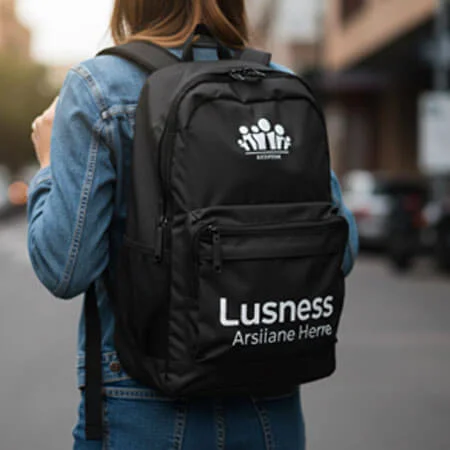
A branded backpack does not necessarily remain inside an office. It travels through stations, coffee shops, university campuses and city centres. A reusable bottle may appear in a gym, a workplace or a lecture theatre. A laptop bag can accompany someone to client meetings, even if there is no prior relationship with the brand.
The product becomes a moving brand touchpoint. That gives promotional merchandise something advertising cannot always replicate: physical presence across different environments without requiring the brand to buy space in each.
It also makes the audience less predictable. For example, a person carrying a branded product is not necessarily the only person who sees it. The people around them become part of the potential audience, whether that is a colleague noticing a notebook during a meeting or another commuter seeing a distinctive backpack on the morning train.
For businesses, that can extend the life and reach of a single product far beyond its original purpose.
Why SMEs can compete through relevance
This is particularly valuable for smaller businesses that cannot compete with national brands in terms of advertising budgets.
An SME does not need to dominate a billboard or sponsor a major event to create a memorable brand presence. It can choose something that its audience genuinely wants to use.
That might mean a well-designed laptop bag for a professional services firm, practical drinkware for an outdoor business or a quality notebook for a consultancy whose customers spend much of their time in meetings.
The strongest choices are not necessarily the most expensive. They are the ones that demonstrate an understanding of the audience.
That is where smaller businesses can have an advantage. Knowing customers well can make it easier to identify the products that genuinely fit their lifestyles, rather than relying on generic merchandise designed for everyone.
In that context, promotional products become less about mass distribution and more about thoughtful brand experience.
The future of promotional merchandise is more personal
The everyday carry economy reflects a broader change in marketing. People are increasingly surrounded by branded messages; however, that does not mean they want more of them. The opportunity for businesses is to identify moments when a brand can add value rather than ask for attention.
The products people carry provide an unusually direct route into those moments. They travel with customers. They enter workplaces. They cross campuses. They move between home and office. They become part of journeys, routines and working lives.
That makes them powerful brand assets when the product genuinely deserves to be there.
The future of promotional merchandise, then, is unlikely to be about putting a logo on as many products as possible. It is about understanding which products people value enough to carry.
When someone chooses to keep a brand close, the relationship becomes more than just something they have seen. It becomes something they experience.
All marks are the property of 4imprint or their respective owners.
Kantar. “Consumer behaviour and marketing effectiveness insights.” https://www.kantar.com/.
CIPD. “Flexible working and workplace trends.” https://www.cipd.org/uk/.
Office for National Statistics. “Hybrid working and working location trends.” https://www.ons.gov.uk/.
Deloitte UK. “Consumer trends and changing customer expectations.” https://www.deloitte.com/uk/.