How Everyday Brand Moments Create New Opportunities
Promo Pro Guide
Read Time: 8 minutes
Posted: October 13, 2026
Some of the best marketing opportunities don't arrive with a campaign brief.
They happen when a customer opens an order, when a prospective client leaves a meeting, when someone attends an event or when a new customer receives a thoughtful follow-up.
These everyday moments may not look like marketing in the traditional sense, but they all contribute to how people experience a business, and, ultimately, how they remember it.
For small businesses, that can be particularly valuable. Marketing does not always have to mean creating another campaign, launching another channel or finding another reason to communicate. Sometimes the opportunity is already sitting inside something the business is doing.
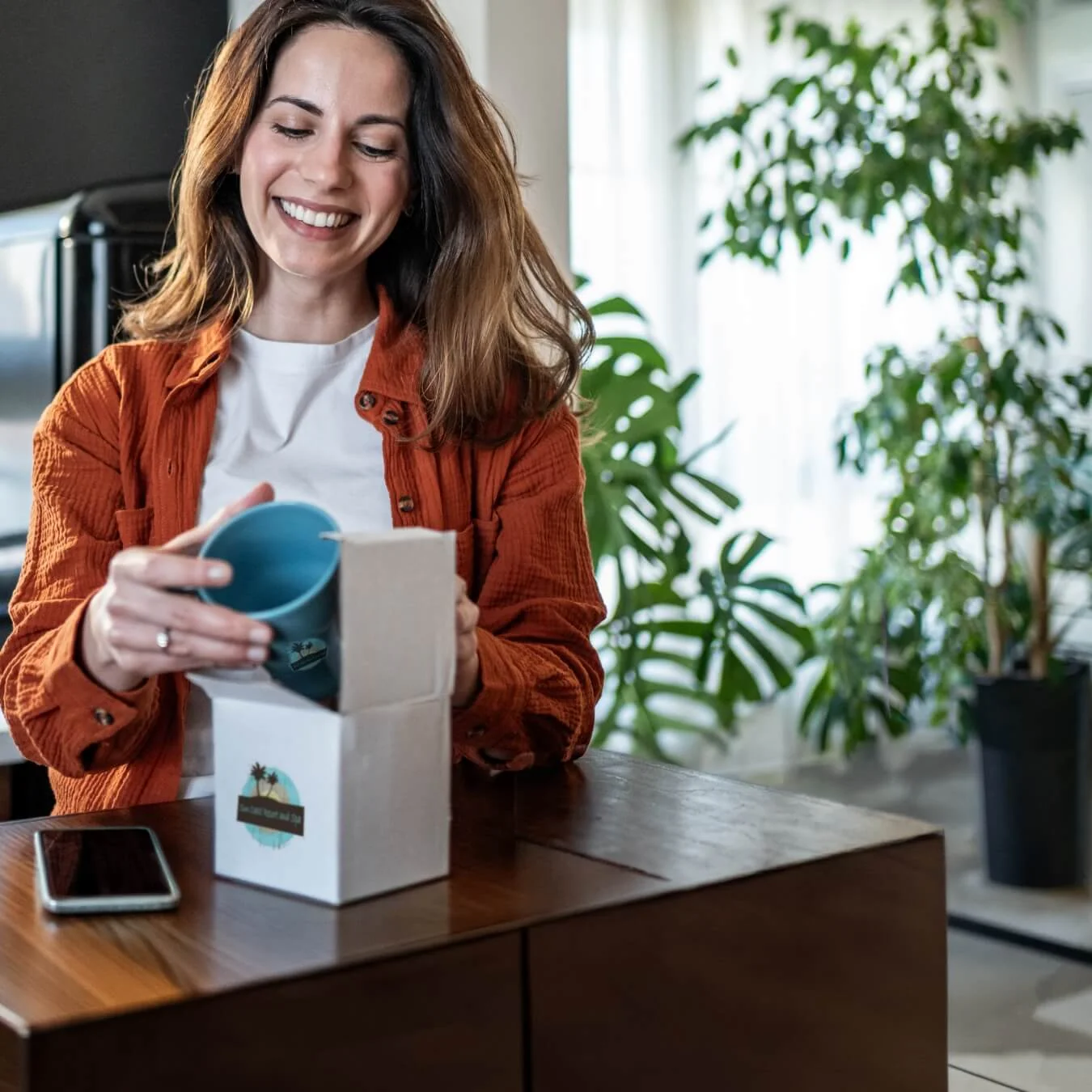
For example, a beautifully presented order can emphasise attention to detail, a live workshop event can be extended through the materials participants take away, or a considered gesture can follow a client meeting. Even a tote bag or notebook can carry part of a brand experience beyond the original point of contact.
That feels increasingly relevant as businesses look for more effective ways to build and maintain customer relationships.
In fact, insight2 reveals that 67% of UK consumers stick to brands, shops and sites they already know for everyday purchases. The research highlights the continuing importance of trust and meaningful engagement as purchasing behaviour changes.
For SMEs, that places greater emphasis on the quality of existing interactions.
Marketing beyond the campaign calendar
Marketing is often organised around defined activities: a product launch, a social campaign, a conference, a seasonal promotion or a newsletter.
Customers, however, do not experience a business according to the marketing calendar.
Take the scenario where they have a conversation with someone from the company: they receive a proposal, visit a premises, attend an event, open a delivery, and receive a follow-up.
Those encounters may never appear in a marketing plan, yet each one contributes to the overall impression of the business.
For a smaller company, there can be an advantage here. Customer relationships are often more direct, which means there are plenty of natural moments when a business can show attention to detail without turning every interaction into a formal marketing exercise.
A workshop, for example, is not simply a scheduled appointment. The way it is presented, the materials provided and what participants take away can all contribute to the experience.
Likewise, an order is not necessarily finished when it arrives. Packaging, printed materials and the small details surrounding delivery can influence how the customer receives it.
The point is not to manufacture more marketing activity. It is to recognise the marketing value in activity that is already taking place.
The physical side of the brand still matters
Digital marketing has transformed how businesses reach customers, but it has not removed the physical side of the customer experience.
People still meet teams, visit premises, attend events, receive packages, pick up printed materials and take products home.
Those moments can reinforce, or undermine, the impression created elsewhere.
Further research2 found that 82% of UK consumers surveyed were put off by disorganised interactions that required them to repeat information or move between teams, while 45% said brands did not understand them as people.
Its relevance here is broader: people tend to experience a business as one organisation rather than as separate categories such as its website, customer service, social media, and physical interactions.
For an SME, creating a coherent customer experience doesn’t need a large customer service department. It can start with the details surrounding an existing relationship. If a business presents itself as a thoughtful and professional organisation online, its packaging, printed materials, and event presence can reinforce that impression offline. The physical elements do not have to dominate the experience. They simply need to feel as though they belong to it.
Start with the occasion, not the product
This is where promotional products and branded merchandise can have a useful role. The starting point does not have to be a product catalogue. It can be the occasion.
A consultancy running a client workshop might provide a high-quality debossed notebook for participants to continue using after the session. A business attending an industry event could offer a practical tote bag that visitors can use throughout the day. A company welcoming a new client might choose a considered business gift, such as a prestige hamper, that reflects the relationship rather than relying on a generic giveaway.
The product becomes part of something that is already happening, and that distinction matters because merchandise works most naturally when there is a clear reason for it to be there.
Some examples include, but are not limited to, a branded travel mug that might make sense as part of a welcome pack. A metal water bottle could have a natural role at an outdoor event. A branded hoodie might belong at a team or community activation where it becomes part of the occasion itself.
The same item can therefore have a very different effect depending on the circumstances in which it appears.
The choice says something about the business, its audience and the experience it wants to create.
Small details can support relationship-led marketing
For many SMEs, reputation and relationships are closely connected.
A report from the British Chambers of Commerce3 found that word of mouth remained the strongest customer-acquisition channel among the SMEs surveyed, cited by 78%. Social media followed at 63%, company websites at 54% and networking events at 44%.
The research points to the continued importance of trust, relationships and face-to-face contact for many smaller businesses.
That provides useful context for thinking about the moments surrounding those relationships.
Take, for example, a client who receives a thoughtful set of corporate gifts after completing a significant project may remember the gesture alongside the work itself. Someone leaving a networking event with a useful, branded product may encounter that business again when they use it, or a well-presented delivery can reinforce the care already put into the service.
None of these things guarantees a referral or repeats purchase, and they should never be treated as a substitute for good service. However, their value lies in adding another layer to an interaction that already matters. For an SME, that can be enough.
Autumn brings plenty of natural opportunities
The final quarter of the year provides plenty of occasions to put this thinking into practice.
There are conferences and networking events, client meetings and customer activity, seasonal campaigns and, for many businesses, the beginnings of Christmas and year-end gifting plans.
October is therefore a useful point to look across the remaining calendar and consider the interactions already coming up.
An event might benefit from a more useful selection of promotional products. A key client relationship could be marked with a carefully selected corporate gift. A seasonal campaign could extend into physical branded merchandise rather than existing solely across digital channels.
None of these needs to become a major initiative. The useful question is whether something that is already happening could be handled with a little more thought.
From promotional giveaways to brand expression
The most effective promotional products do not necessarily need to be unusual. They need to make sense.
A branded notebook can become part of a workshop. A printed tote bag can extend a retail or event experience. A branded travel mug can become part of someone's working day. A metal water bottle can become associated with an event, activity or particular audience.
The product is not the story on its own. Its meaning comes from what surrounds it.
That is also why personalised business gifts can work well when there is a genuine reason to acknowledge a particular customer or client. The gesture becomes part of the relationship rather than a piece of merchandise distributed without context.
For SMEs, this creates possibilities without requiring a large promotional budget or an elaborate campaign.
The objective is not to put a logo on as many things as possible. It is to recognise the moments when the brand already has a presence and make them count.
Making everyday marketing work harder
There is a useful opportunity here for small businesses: marketing can become more considered without necessarily becoming more complicated.
The purchase, meeting, event, delivery or client interaction is already happening. The question is what surrounds it.
A better event or exhibition pack, more thoughtful packaging, a useful piece of branded merchandise, or a carefully selected corporate gift can all enhance an existing experience.
Sometimes the answer may be physical. Sometimes it may simply be better communication, presentation or follow-up.
The important shift is to stop viewing marketing as something that begins when a campaign launches and ends when it finishes.
A business is communicating throughout the customer relationship. Every order, conversation, meeting and event contributes something to the picture people build of it.
And for an SME, those everyday moments can be among the most natural places to make the brand feel considered, consistent, and distinctly its own.
All marks are the property of 4imprint or their respective owners.